Mission Brief
Digitizing biology like we digitized intelligence.
We are building a predictive map of drug–cell interactions. A label-free photonic platform fused with transformers watches biology live, turns every photon into insight, and makes discovery deterministic.
Today's reality
$180B
Annual spend on programs that still rely on destructive snapshots.
Drug candidates fail in trials because we cannot watch living biology respond in real time.
Executive summary
From probabilistic guesswork to deterministic science
Traditional discovery pipelines interrogate biology in static, destructive frames. Even with modern computation, we still lack a live feed of how intact cells transform under therapeutic pressure. Precigenetics unifies label-free optics and transformers to digitize the chemical state of living cells, predicting response trajectories, revealing resistance in context, and compressing decision cycles from weeks to hours.
Real-time chemical profiling of intact cells eliminates guesswork from MoA calls and fate prediction.
Transformer models learn from every photon collected, compounding accuracy across programs and partners.
The platform reveals resistant micro-niches inside tumors early enough to plan combination strategies.
A living atlas of cell-compound interactions becomes the foundation for deterministic drug development.
A fundamentally new approach
We replace destructive snapshots with a non-invasive platform that watches cellular chemistry unfold over time.
Blind & destructive
Legacy assays rely on killing and staining cells to read coarse endpoints like viability or cell count. Subtle chemical decisions that determine success happen long before those readouts.
Static snapshots
Pipelines deliver disconnected timepoints—the equivalent of understanding a feature film from a few stills pulled hours after the real action occurred.
Reagent-heavy & costly
High-touch chemistries push experimentation costs toward ~$10K+ per plate, throttling iteration exactly when compound, dose, and combination space should be explored.
Partial fixes
Incremental tools tweak the workflow, but none solve the core issue: reading the full, live chemistry of a cell non-invasively and in real time.
Inside the platform
Photonics, microfluidics, and transformers combine to create a continuously learning system where every experiment sharpens prediction.
Patient-derived cells sit inside a custom microenvironment. We watch them adapt to perturbations under truly physiological conditions.
The data flywheel
When experimentation becomes virtually free, the signal compounds. Each scan enriches the atlas, elevating future predictions.
Predictive accuracy
Transformers learn faster than the wet lab can iterate.
Accuracy accelerates as longitudinal data scales. What begins as pattern recognition becomes deterministic understanding—allowing wet-lab teams to run fewer, smarter experiments.
Melanoma disease models
First light inside patient-derived tumors
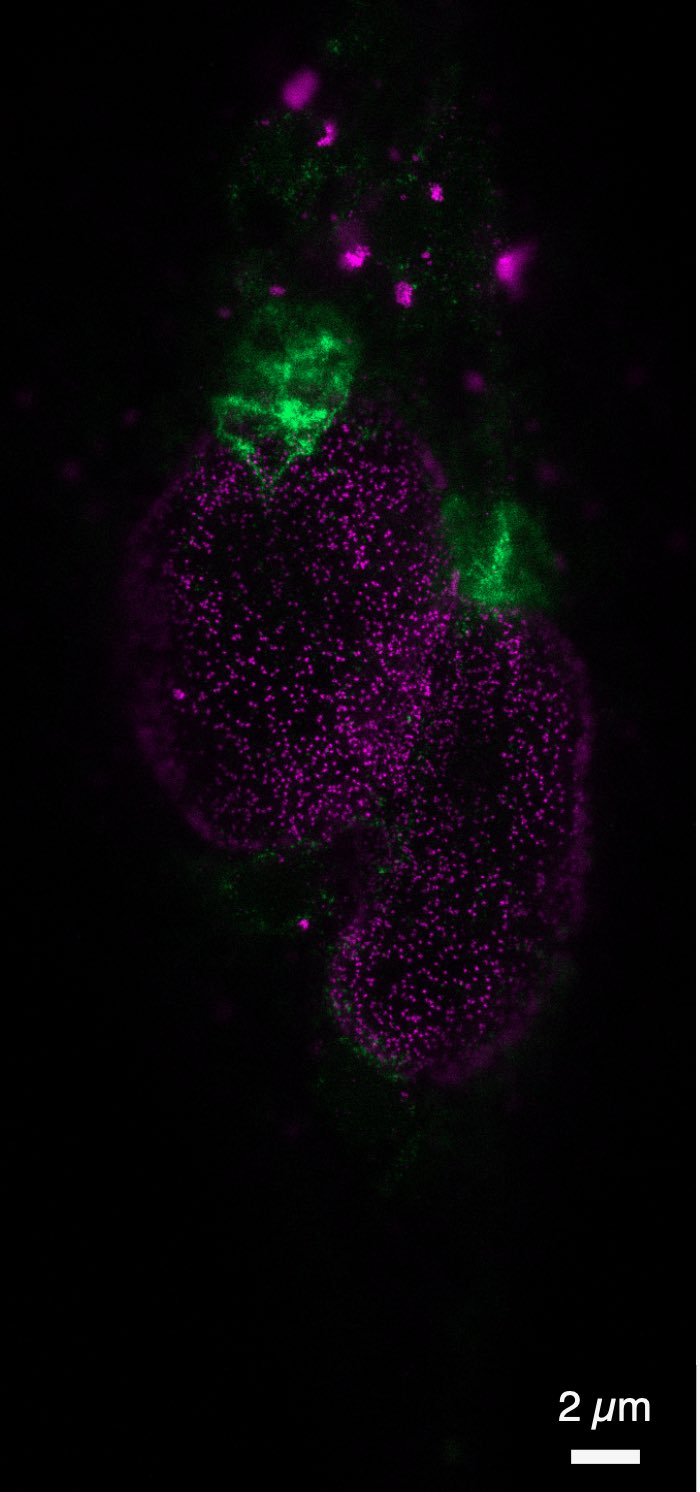
Patient-derived tumor models reveal how the platform reads fate, resistance, and mechanism hours—or days—before conventional assays.
Hours-ahead fate mapping
Ratios between a drug-responsive band and lipids forecast which regions of a tumor will die, persist, or rebound hours before morphology shifts.
Resistance uncovered live
Cytochrome c mapped against heme exposes apoptotic pockets next to quiescent enclaves, guiding rational combination therapies.
Mechanism decoded
Full spectral trajectories under preci-drug-1 reveal a fingerprinted sequence of protein and lipid transitions—classifying MoA within a day.
Proof in numbers
What we can already see
Metrics from our internal studies show how fast the platform transitions from first light to confident, contextual decisions.
Melanoma disease models profiled
>300
patient-derived tumor models scanned end-to-end
Spectral points / cell
~4,200
high-dimensional chemistry captured per measurement
MoA classification
<24 hrs
time to confident mechanism prediction
Correlation
r > 0.95
vs. reference MoA timelines for preci-drug-1
Roadmap to the living atlas
Execution milestones that bring the real-time cell atlas to scale.
The team digitizing biology
Multidisciplinary builders across optics, biology, computation, and company building.
Founder & CEO
Parmita Mishra
Computational biologist and engineer who led hyperspectral imaging breakthroughs for oncology before founding Precigenetics.
Head of Hardware
Sasaan Showghi
Former Amazon inventor now building our single-cell optics stack from chip to cloud.
Head of Biology
Selim Boudoukha
Ex-UCSF investigator with 200+ citations translating epigenetic signal into decisive biology readouts.
Chief Operating Officer
Max Dordevic
Former biotech CEO who brokered multi-million-dollar discovery partnerships across Big Pharma portfolios.
Chief Product Officer
Ahmed Nahas
Bioengineer and former deep-tech founder now integrating our hardware, software, and biological platforms.
Join the build
We partner with discovery teams, toolmakers, and data scientists who believe biology deserves the same digital rails as intelligence.